Chris writes
Last night we finished our evening experience in La Paz with four eventful moments.
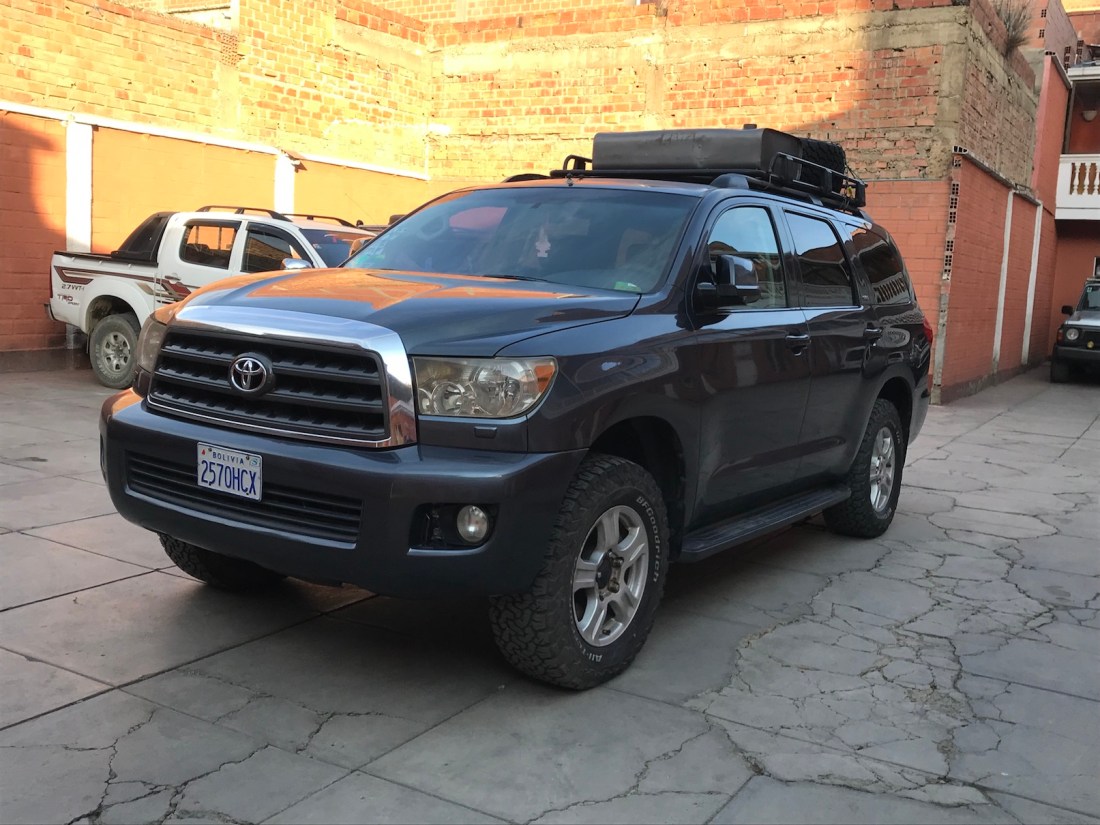
Firstly we handed back our Classic car as the agency has replaced it with a Toyota Sequoia which is a 5.7 litre SUV based on a Truck platform. This will prove extremely useful as we are to find out very soon.
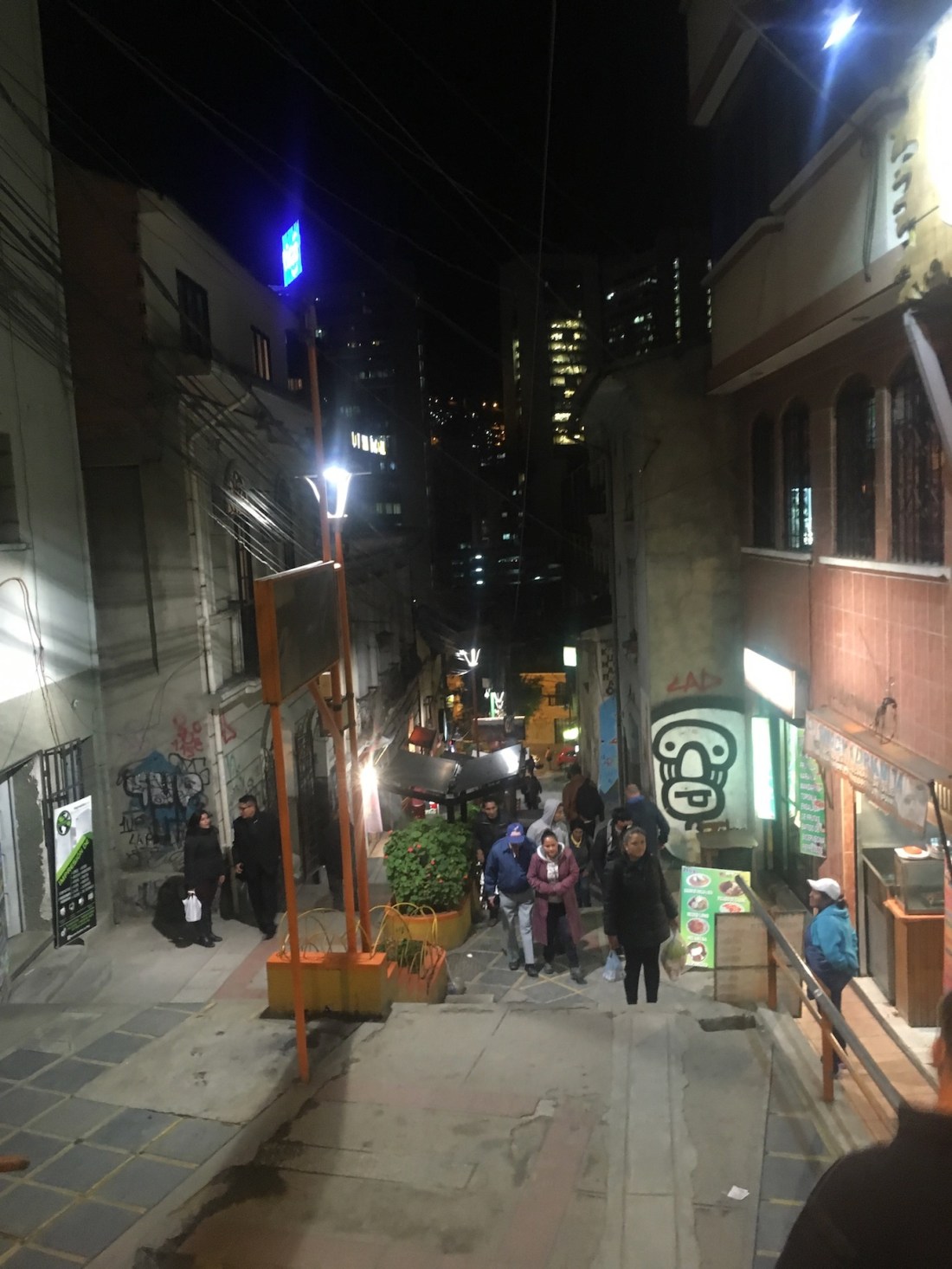
Then we ventured down into town which in La Paz is literally running down 1500 feet down hill into the depths of La Paz where Warren McCraig a Canadian who owns numerous businesses in Bolivia and the person hiring us our prepared vehicles joined us for dinner (no guinea pig or Alpacas died in the making of tonight’s meal).
The next big decision over dinner and not influenced by any alcohol, was that we should change plans and tackle the infamous “Death Road” that runs around the Coroico Canyon.
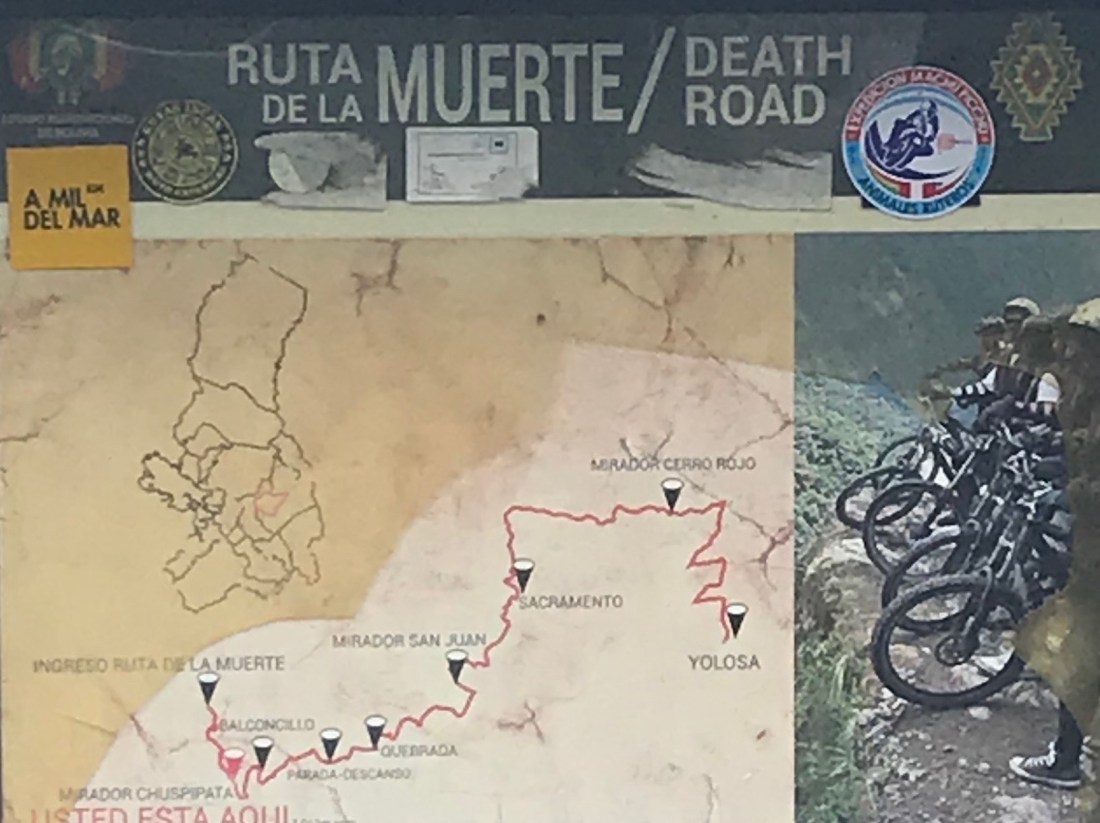
Well, we have come this far it would be churlish not to tackle the infamous challenge
Finally instead of being subjected to a roller coaster taxi ride climbing out of the city back to our hotel, we took one of the very impressive Cable car links which would be more at home in a first world country such as China or an Austrian ski resort.
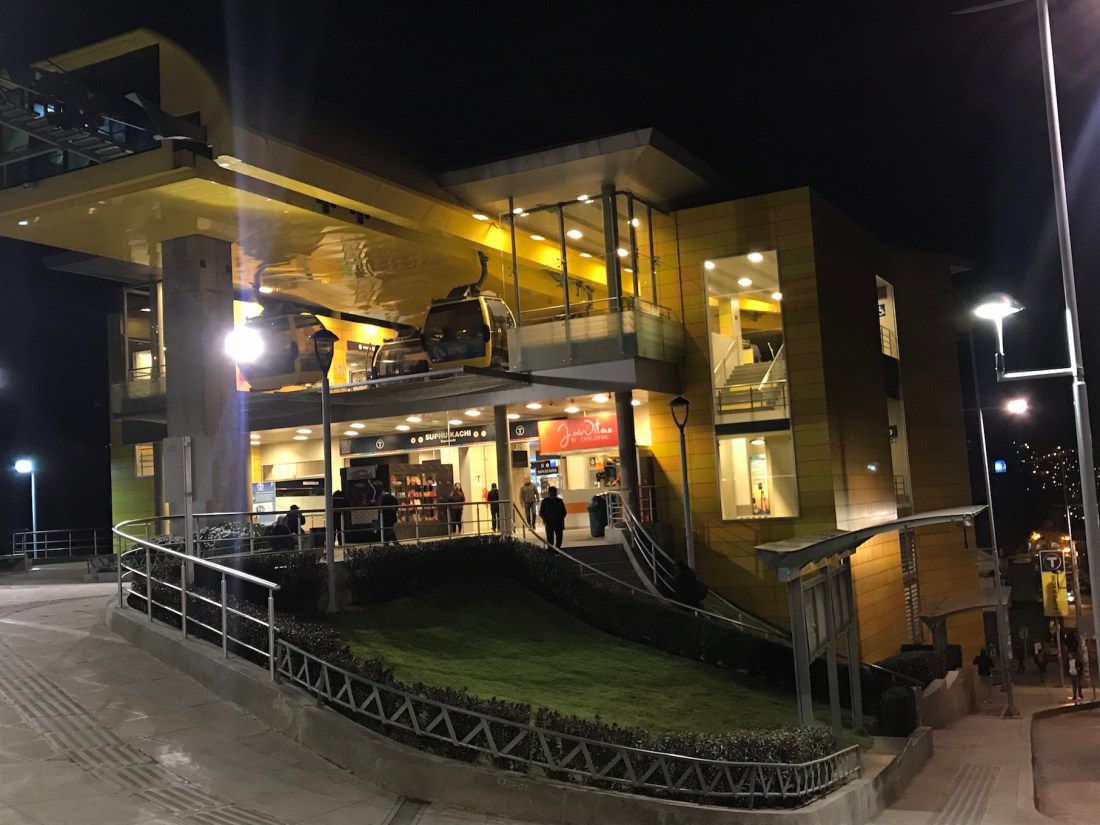
Again – very surprising and impressive in quality and execution.
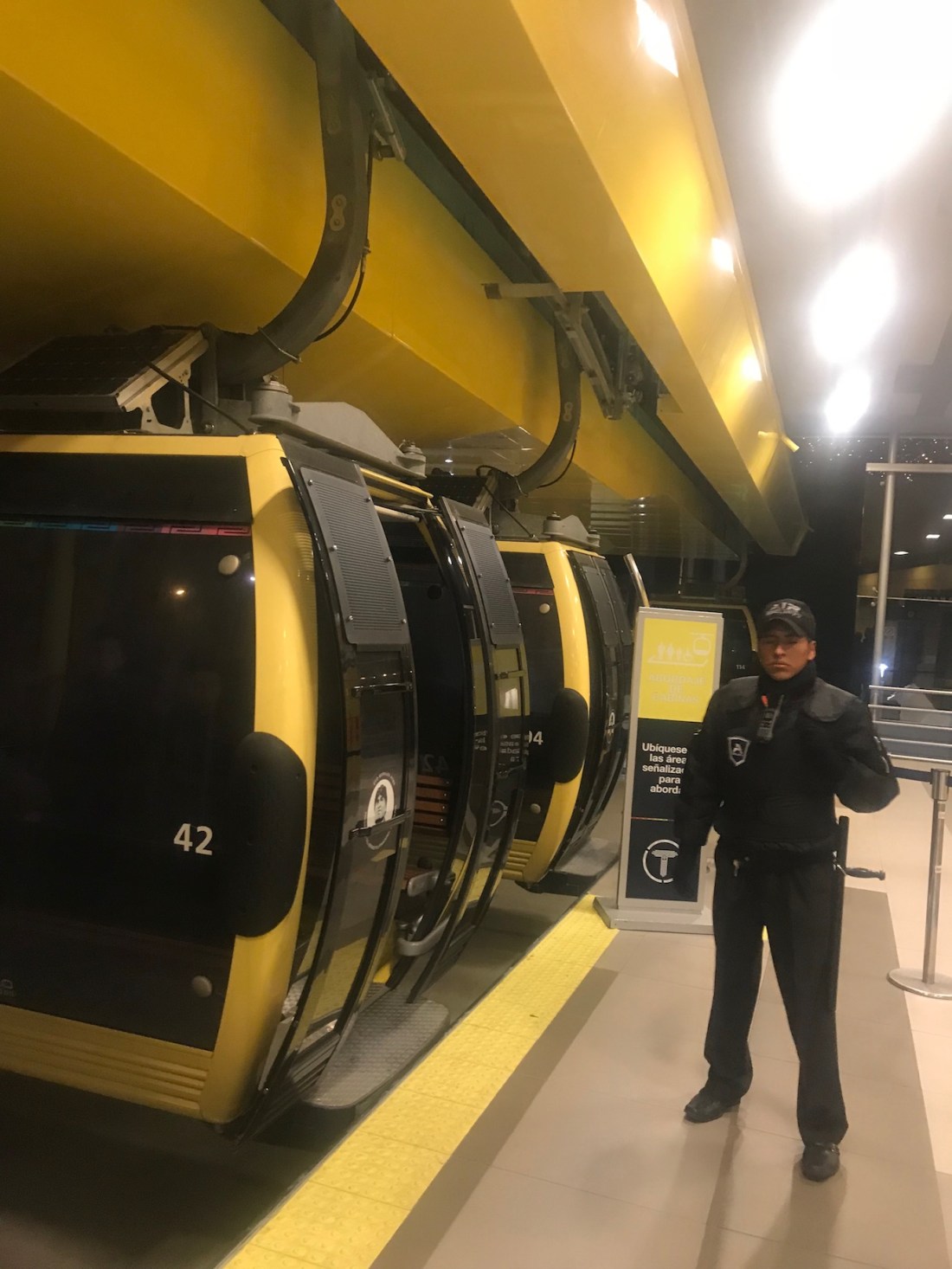
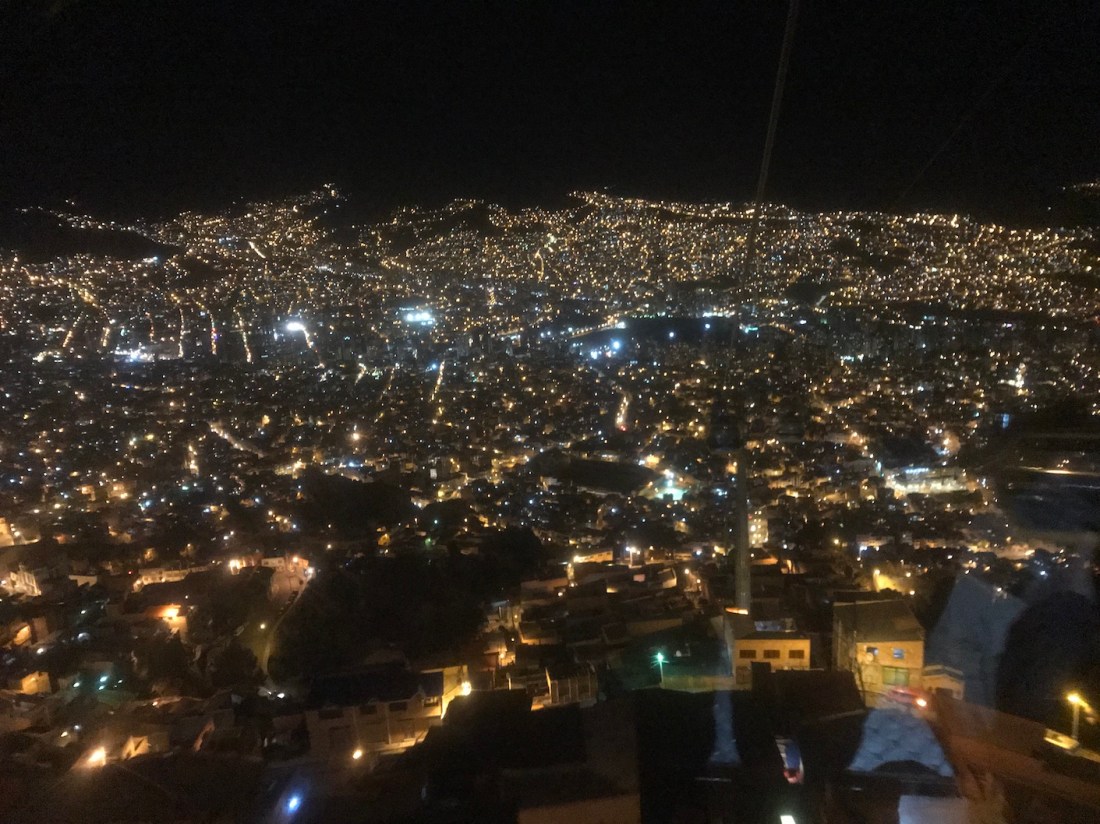
This allowed us sights of the city similar to overflying London on an easterly approach to Heathrow.
The next morning we awoke early ready for adventure only to be delayed by not being able to find the right paperwork for the vehicle in the car. Luckily the delivery driver was still in the hotel but not an early riser so we lost over an hour heading up towards Death Road.
However, an hours delay at 7.00 am was then trumped by a two hour fight through La Paz traffic.
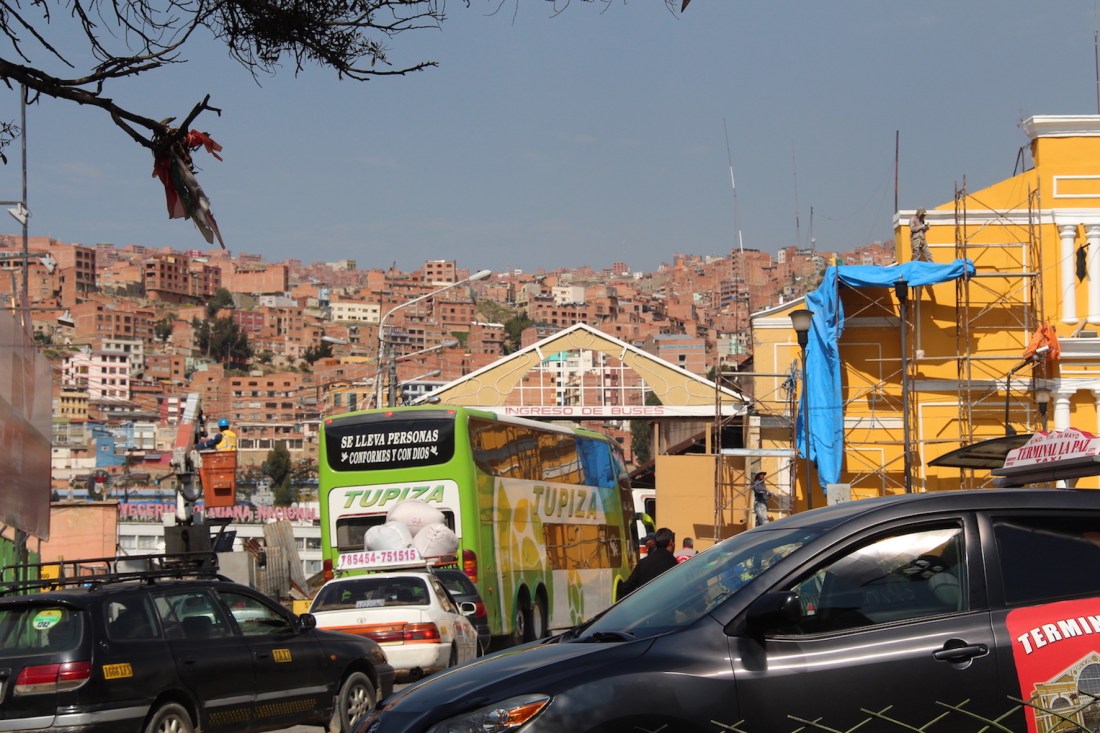
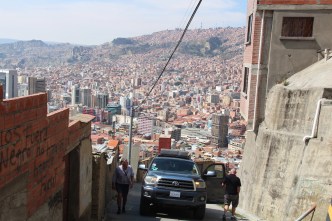
There was no consensus between our trusted Kate on Waze, Google Maps and “Here we go” navigation systems which led us to a road that was single track 1 in 5 upwards accent with 180 degree hairpins. This was extreme driving in a city at 10 mph !
So much so that on one occasion we nearly beached the vehicle on the turning incline and at one time had the front offside dangling two feet above the ground.
The 400 bhp and some very skilful driving got us literally back on the of the road again, very hairy and we are still in the city – signs of things to come.

We exited the city on the main road N3 – not impressive and paid numerous fees to random people who had erected their own bollards and poles across the roads.

The run to Death Road provided more incredible scenery
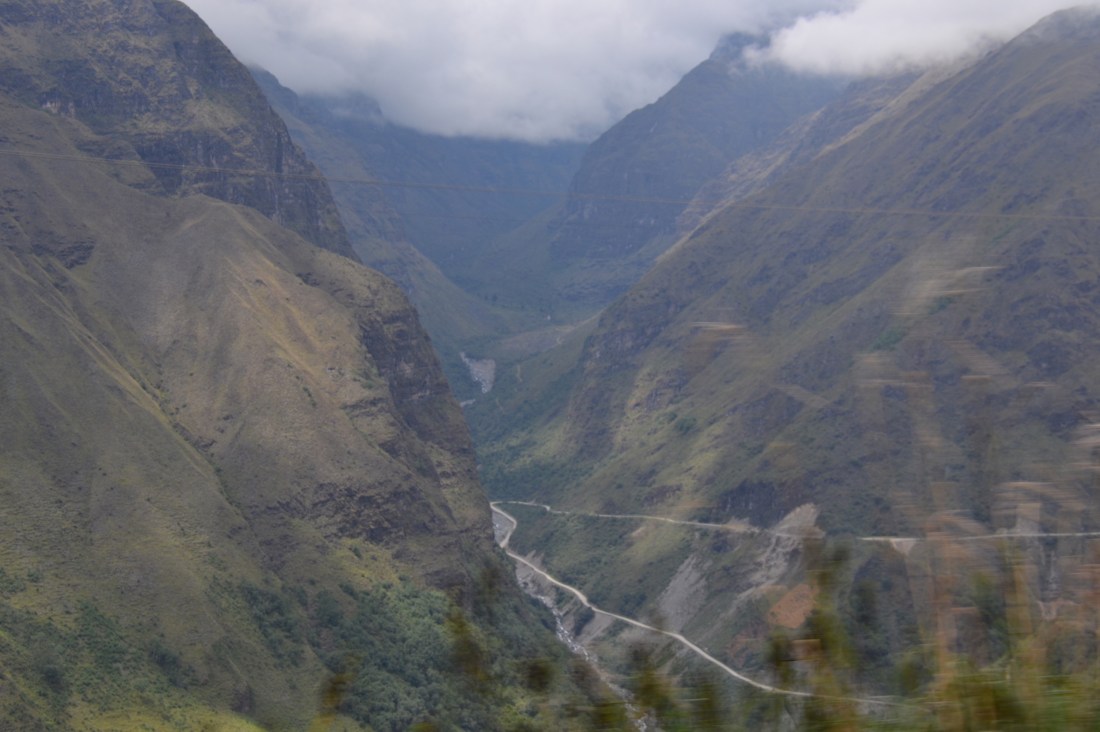
Sadly for many who took this trip it was a life’s necessity, but often their last trip as on average 350 people per year died on the North Yungas Road, hence the name Death Road.
The team elected to put me in the driver’s seat and we set of on the 30 kilometre journey in fine weather as we tracked this historic route which made Clarkson sweat and become (on film) very scared.
I always thought he was wimp!
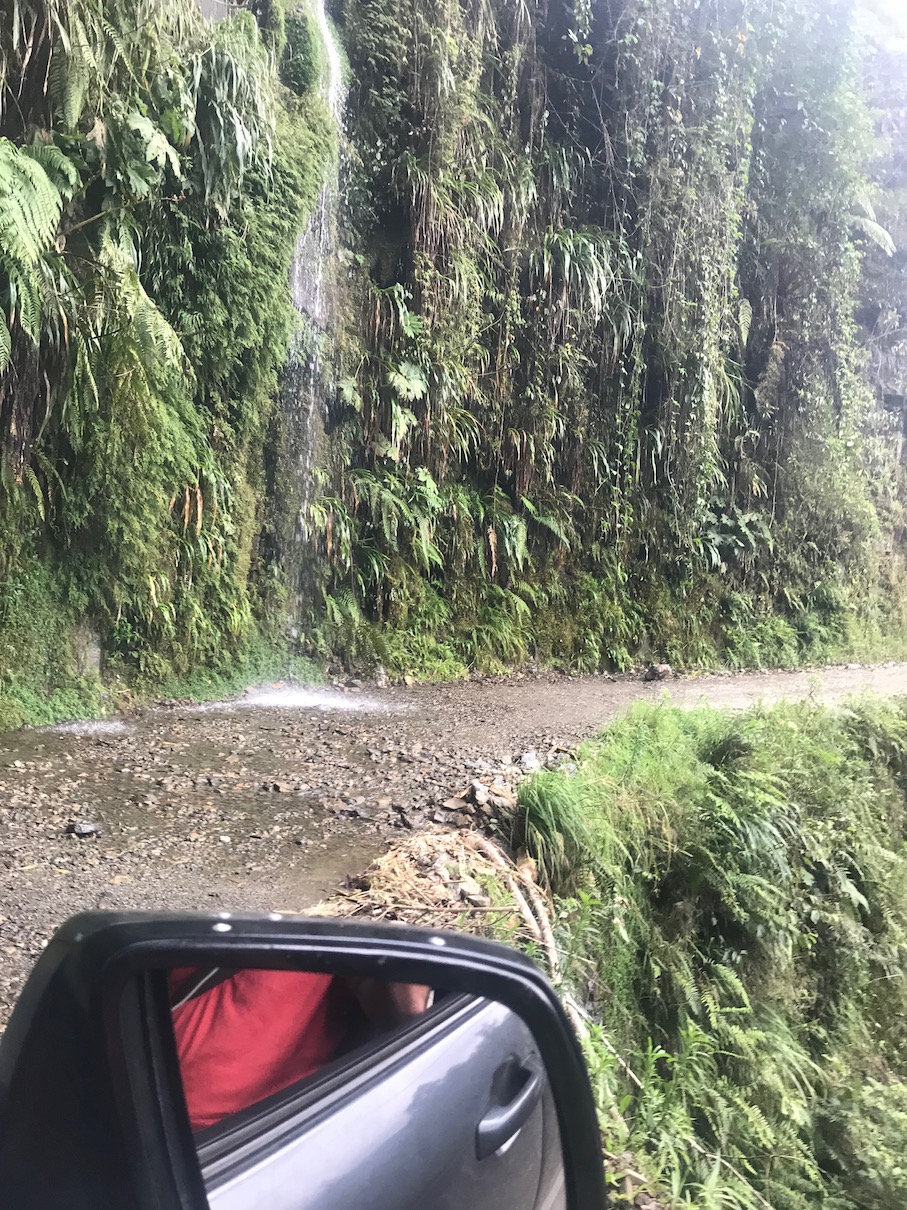
Incredibly although the track is no more that 2 metres wide in some places, you are asked to drive on the left as you go up and for those on the down hill run also have to drive on their left so they can see exactly how close their wheels are to the sheer drops over the edge of literally thousands of feet.
The new danger of the road is that hundreds of mountain bikers descend the road when most cars ascend – in many places they are far faster than cars and inevitably on the wrong side of the road, so in some ways the car driver’s enjoyment is spoilt by having to worry which type of mountain bike and which nationality of rider will land on the bonnet and be launched over the side to certain death.
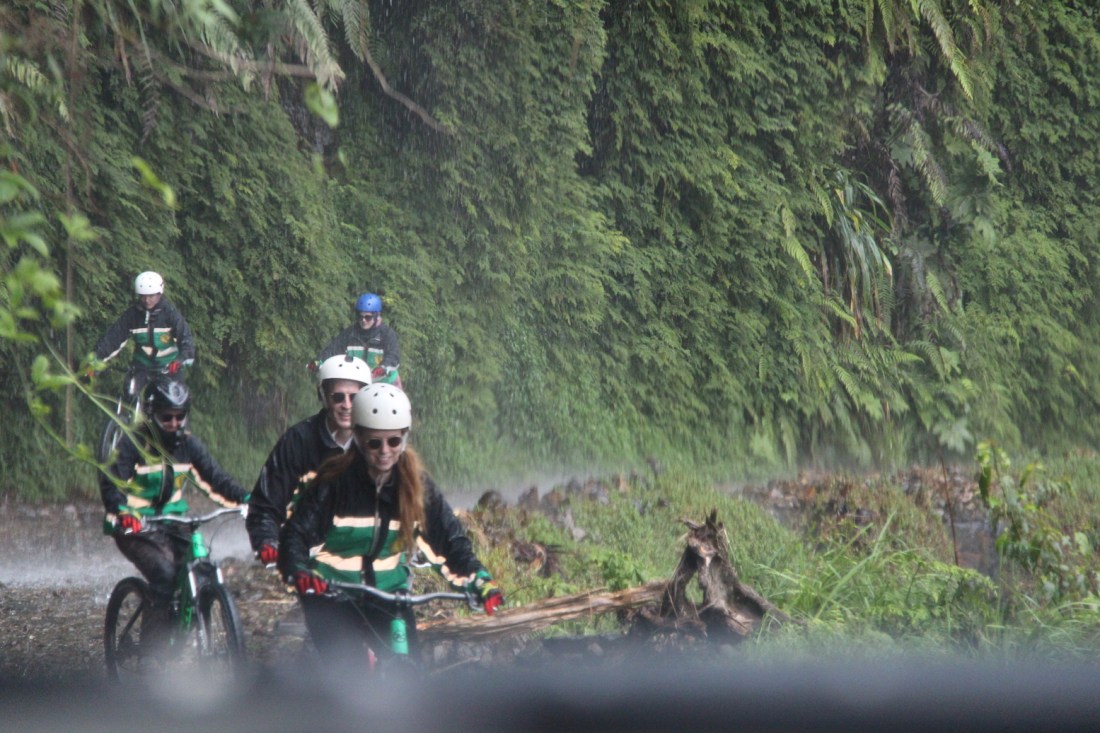
Having set a speed that the team were happy with, we progressed upwards and onwards tackling the track in a ‘sensible’ manner.
As a complete coincidence we had the Bee Gee’s “Staying Alive” as one of our accompanying music tracks.

Then as we hit 10,000 feet, the inevitable “Top Gear” Challenge envelope was handed to us again – “You have a blow out, change a very heavy wheel and tyre again!”
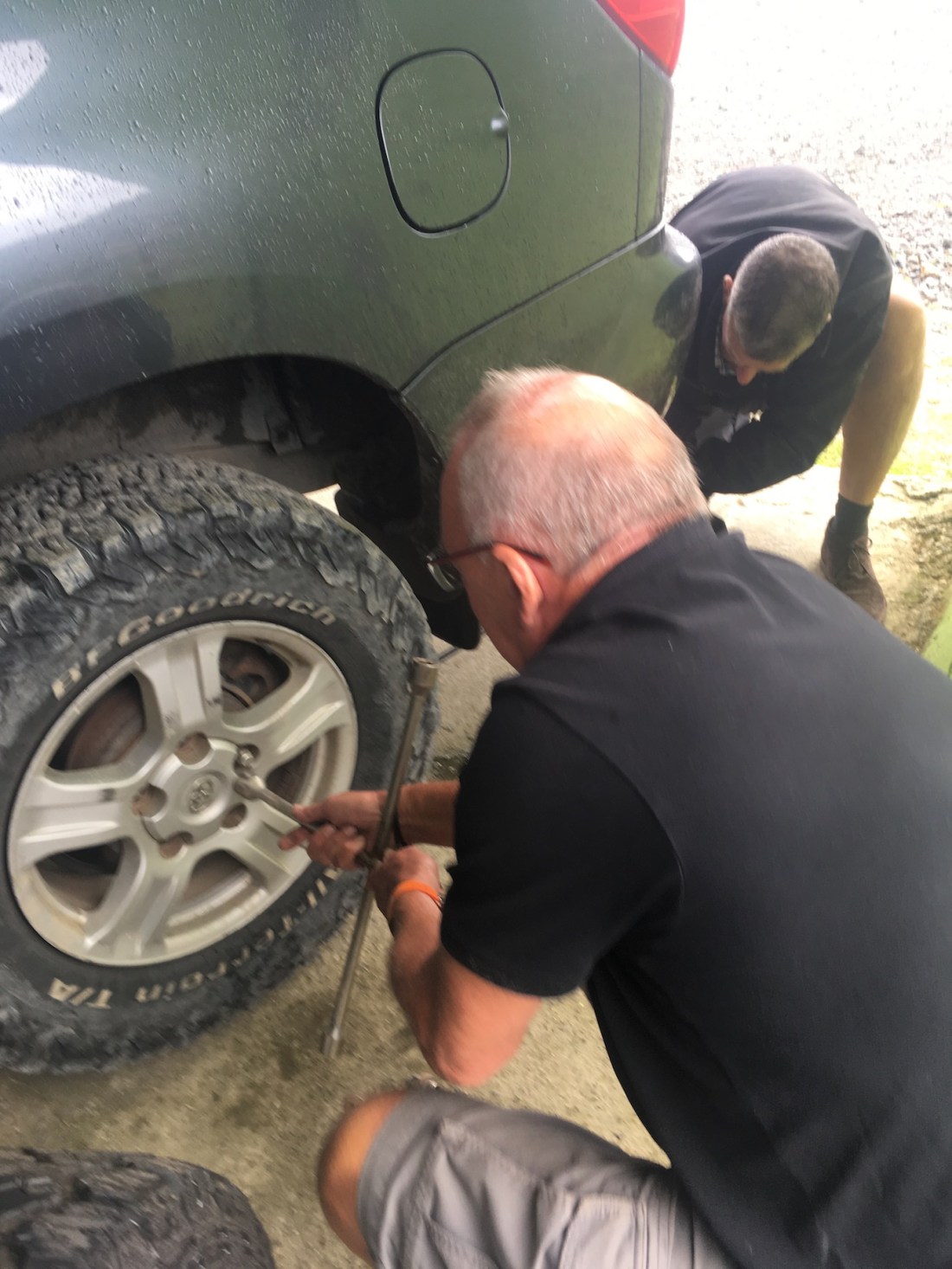
To change a tyre is hard on a small saloon car, very hard on a two ton SUV, so please understand how hard it is when there is only half the amount of oxygen compared to normal road levels and the one hundred weight spare is seven foot up in the roof rack.
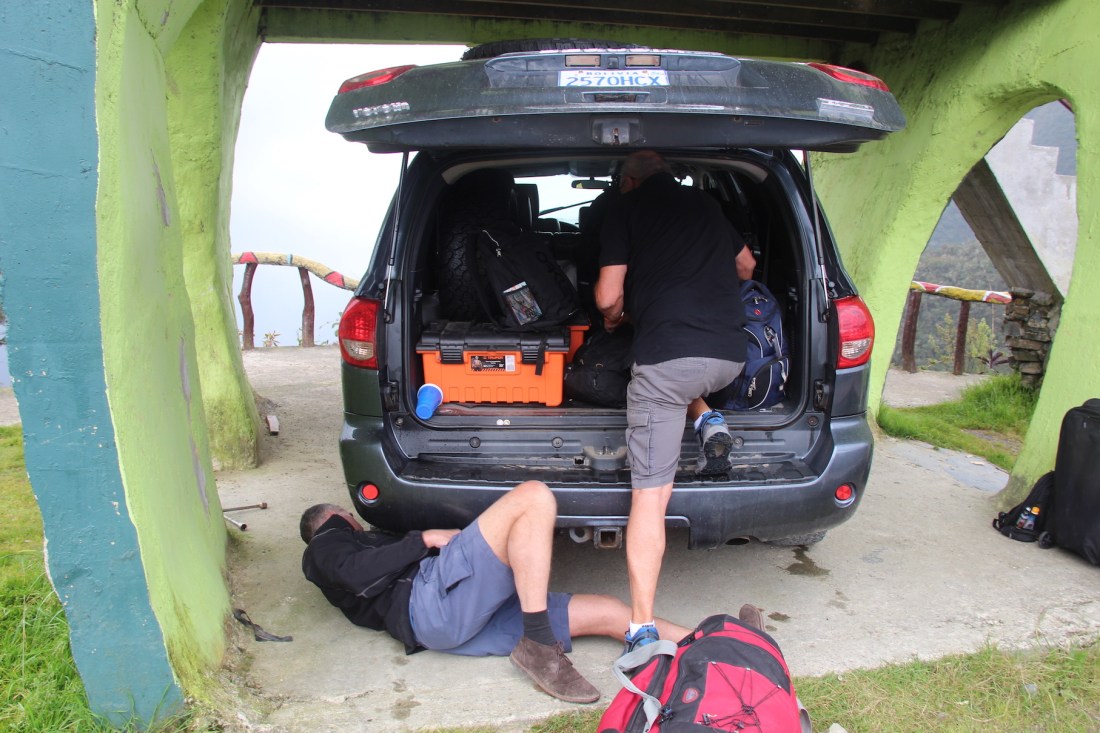
As the rain started and the mist came down we found a convenient view point shelter and used that as protection and took advantage of the concrete base.
If this wasn’t bad enough, as we moved off the heavens opened and the mist closed in making Death Road even more challenging. We passed dozens of bikers sheltering under the overhangs which on numerous occasions placed us even closer to the edge.
But we made it in one piece and without any ‘moments’, for me anyway.
The trip out to this “special stage’ and the return to La Paz took over 6 hours and we still had over 230 kms to tonight’s rest point Oruro.
Now we had to renegotiate La Paz again
and its thousands of mini buses that stop anywhere in any lane and the hundreds of taxis driven in extremely haphazard manner making five lanes from two on any possible opportunity.

We finally left the city fuelled up (at 34p per litre) changed drivers and Mike drove us in a race against the approaching dusk.
The road to proved to be good and our timing was ahead of expectations as we cruised the altiplano at 12,500 feet.
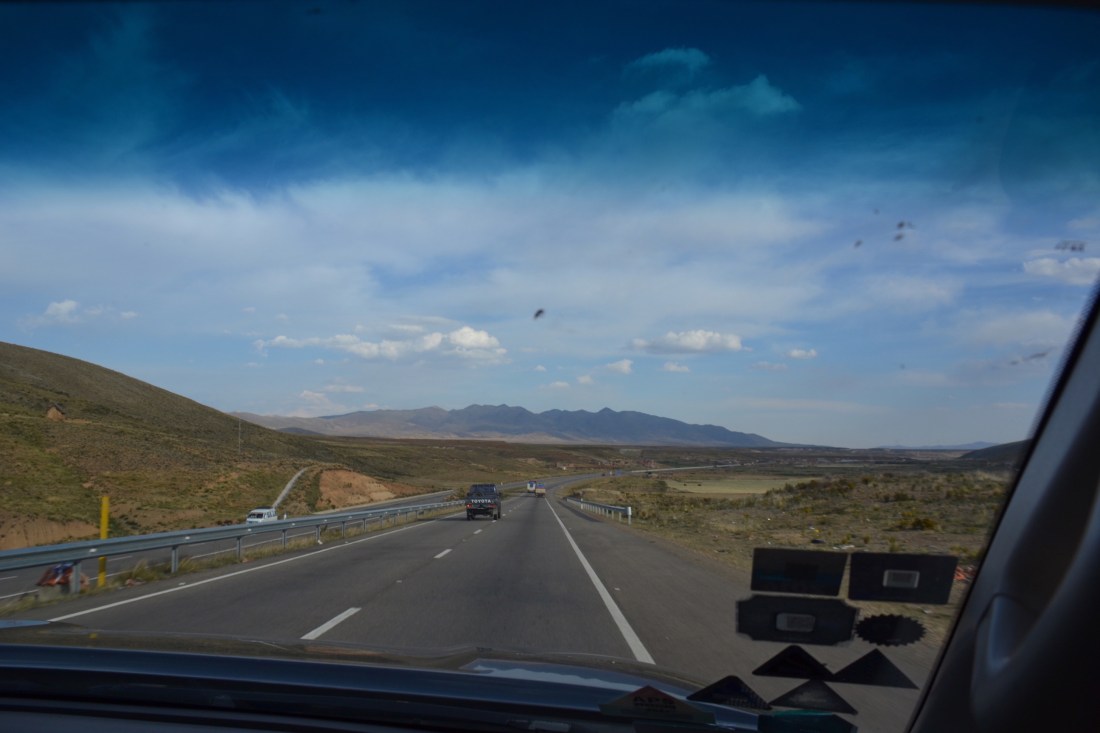
Tomorrow is another day but today was special it reflected exactly what we planned “Our America’s Challenge Drive” to be but we didn’t expect La Paz city to also provide some driving challenges!
Day 50 over – one of the best, but tomorrow no doubt will throw more challenges at us as we try to find a decent tyre fitter and then head for Unuyi and the amazing salt flats.
 Our America’s Challenge Drive